Zoo Negara Malaysia is managed by the Malaysian Zoological Society, a non-governmental organization established to create the first local zoo for Malaysians. Zoo Negara was officially opened on 14th November 1963 and has matured into a well-known zoo all around the world. We have a total of over 5137 specimen from 476 species of mammals, birds, reptiles, amphibians and fish.
Zoo Negara covers 110 acres of land which is situated only 5km from the city of Kuala Lumpur. Over the years, the zoo has transformed itself to an open concept zoo with over 90% of its animals being kept in spacious exhibits with landscape befitting its nature. We are working in making sure that the old zoo concept is changed entirely.
Zoo Negara – Vision
To be one of the world’s premier zoological park and aquaria dedicated to conservation, recreation, education, training and research of various animal and plant species.
Zoo Negara – Mission
- To provide an outstanding and dynamic habitat for animals and plant life and incorporating high quality animal health care and husbandry.
- To be the leader and innovator in wildlife conservation, recreation, education, training and research.
- To collaborate and disseminate scientific knowledge to local, regional and worldwide zoos through our science-based approach to wildlife management.
1.) The Malaysian Zoological Society has adopted the drawing of a mouse deer or “Sang Kancil” as the Society’s emblem.
2.) Sang Kancil is a clever, tricky mouse deer who is always finding himself in predicaments with animals that want to eat him or harm him, but he cleverly manages to escape each time.
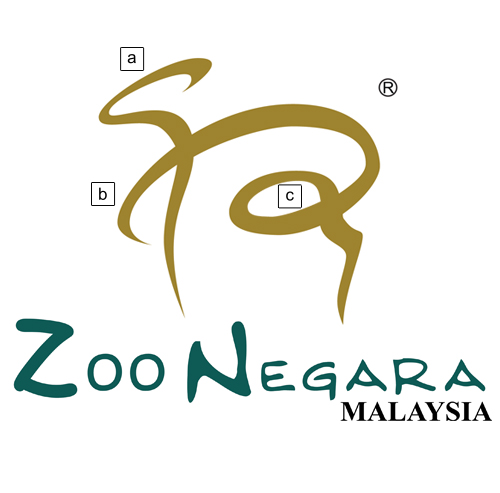
Logo :
a) Guided by strong basic fundamentals deeply rooted into the ground, Zoo Negara is forging forward to transform itself into a 21st century zoo dedicated to conservation, recreation, education, training and research of flora and fauna. Also, the essence of continuous innovation is still ahead with a clear sense of direction.
b) Collision of the two lines signifies the key strength of Zoo Negara sharing a unified vision for flora and fauna and laying the groundwork with continuous improvement. The intersection also denotes the progressive system thinking in Zoo Negara with the responsibility to communicate its extensive knowledge to be shared with local and international zoos.
c) These combined efforts spiral into a circle which symbolizes the holistic management approach to conservation as the key and unique characteristic of Zoo Negara, making it a model for other zoos. These efforts also further create a dynamic projectory at a higher level each time.
d) The earth tones of gold and green colours denote Zoo Negara’s surroundings for flora and fauna in Kuala Lumpur city.